Personality and Character
Personality tests are 2D shadows of a 3D person.
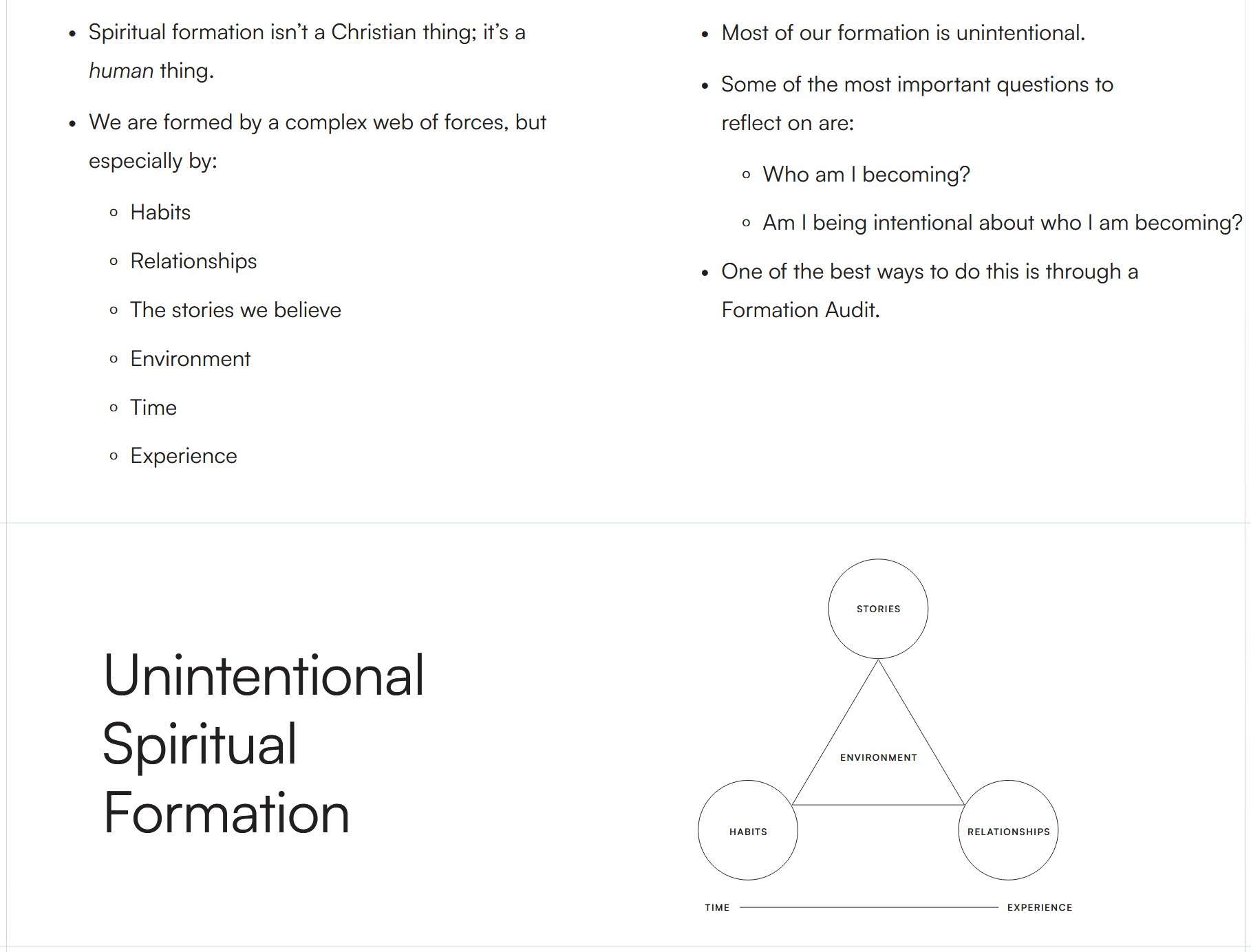
We are all complex people who have been formed by our habits, relationships, and truths we accept, over time, and through our experiences. We change both deliberately and unintentionally.
Now, I like personality tests. Even though they’re flawed and a bit cringe. I’ve personally taken Myers Briggs/16 Personalities (for fun) and been put through Insights (for work). Each one’s like a lens on the person - condensing the complex self into one of x personality IDs.
You can imagine the most simple personality test as one that splits the world two ways. Oh wait, it already exists and it’s called Type A/Type B.
If we go a little further and add a second “axis”, like people-orientedness, now we’ve got 4 quadrants! OOohoooOH it’s suddenly starting to get a little mathsy.
And so it goes (I guess) when people make up these scales.
We can go deeper! Geert Hofstede went as far as to make up a 6-dimensional scale for appraising the personality… of nations!. Why do I know this? I had to study it on my OU course about UX design, of course!
While there are clearly more than 16 kinds of people in the world, I find MBTI to be fun and helpful when I’m meeting someone new! Oh, you’re a planner? Would you call yourself well organised? I’m not!
Sometimes you can tell right away that you’re talking to someone who hates personality tests, and they’ll have no idea what their profile is (unless an employer made them do it). They’re usually ‘S’ types 😉
MBTI
Myers Briggs Type Indicator (MBTI) is simply known as “Myers Briggs” and administered widely by an online clone called “16 Personalities”.
My type is ENFP or “Campaigner”:
- Extrovert (I’m more of an ambivert, and I gain energy from solitude not socialising, however, I am often the social glue and I am “on” when I’m in public).
- iNtuiting (Perceiving there is more to life than what we see, vs Sensing alone)
- Feeling (vs primarily Thinking)
- Prospecting (trying stuff out, vs Judging, which would mean planning in advance)
This surprises some people because they think I’m some detail-oriented tech geek, which… no. I want new things to exist. I love reckless invention. I will be the first to sign up for karaoke, just to make it feel safe and doable for the next person to try it too.
Insights
Insights was the corporate-sponsored religion at my workplace for a couple of years. Every training session came back to insights. “Now the ‘Blues’ in the room are probably wondering where the rest of the instructions are…”. It did get a bit too much.
On Insights, which your company pays for btw, every employee gets a “custom”/”unique”/”tailored” profile based on their questionnaire answers. In truth, these are sentences and paragraphs swapped in and out based on your answers, making the final aggregate of all sentences kind of unique in the way a shuffled hand of cards is kind of unique. But not super original.
I am supposedly a “27 - Helping Inspirer” (Yellow and Green ‘above the line’).
Insights has 4 colours, 8 types, and a bunch of other geometry that’s supposed to tell you things about working relationships.
It has function, but like all these things… it’s a facsimile of reality! It has some truth as an analogy but it’s not really you.
The real power of using something like this in a corporate setting is simply building empathy. Oh, Mitch is detail oriented and doesn’t like rushing into implementation without a clear spec. Fair enough. Holly is action-oriented and low on supportiveness, which is why she pushes hard in meetings. Makes sense.
Btw, the key points for the Yellow “Inspirer” type are:
- Inner Drive: Wishing to accept others; connecting with others. (mostly true)
- Goal: Popularity and approval. (not exactly my goal but it does feature in my ego)
- Judges others by: Their articulation and empathy. (very true)
- Influences other by: Praise and favours. (yep)
- Value to the organisation: Relieves tension; promotes people, including themselves. (bit of a burn at the end there but somewhat true, i think i deliver human-centered pragmatism as well)
- Over uses: Optimism and flattery. (i wouldn’t say i flatter but i’m a well known optimist)
- Under moderate pressure becomes: Careless, disorganised and inconsistent. (check, check, and check)
- Fears: Loss of self-worth and social acceptance. (no, i’d say i fear being looked down upon and spoken badly about OH WAIT that’s the same thing)
Where a profile diverges from a person
There were bits in my personalised Insights profile that I just don’t recognise. Like “easily takes offence and holds a grudge” which surprised me. Those aren’t in my character. By the choices I’ve made, the stories I hold dear, the things I’ve honed about myself, I am just not at the center of my own universe in such a way that I could easily take offence or hold a grudge. I don’t think I’ve ever had an enemy (though I may have been one… sorry).
Personality may be something that emerges, wild and unformed. But I am not just a personality, I have personality and character.
And my Mum definitely told me a lot of times in my childhood that something I hated was “character building” so I sure hope it worked.
Michael Scott, according to 16 personalities, would be an ENFP like me, if he were real. Now, I get this.
Michael: Do I need to be liked? Absolutely not. I like to be liked. I enjoy being liked. I have to be liked. But it’s not like this compulsive need to be liked, like my need to be praised.
That measures up to all the Yellow stuff above too, right?
But Michael Scott does things that Ste Griff doesn’t do: tells jokes at others’ expense. lies. acts primarily in self interest. sidelines and belittles others. wastes money. claims others’ successes. blames others for failure. etc. etc.
All that to say, we make choices about our formation as human people.
Formation
At the top, I had a bit about what forms us. I cribbed that from a school of thought called “practicing the way of Jesus” which has been blowing my mind since c. 2017.
It’s kind of a personal therapeutic intervention. The concept is that we are being changed/transformed by the influences around us all the time: becoming more like our friends, our neighbourhood, and the content we doomscroll. If we can recognise unintentional change in ourselves, then we can ask “do I like who I’m becoming?” and seize deliberate change instead.
For me, as a follower of Jesus of Nazareth, it’s my goal to be with him (through meditation), become like him (by following the teacher), and do the things he did. But as you know, I’m still working on it.
Til next time 🗣💌